We were three young doctors working in less than ideal conditions in the rural areas of South Africa. Two years out of medical school, serving a year's Community Service at Isilimela Hospital in the very picturesque — but very primitive — Eastern Cape Province. We were trying to look after the health of 75,000 people, almost all of whom were subsistence farmers. Desperately poor peasants. We were the only doctors. Our nearest referral centre was 100 kilometres away, 22 of them on dirt road in poor repair. The trip took two and a half hours, and was nightmarish for a person in severe pain.
Early in January 2001, we encountered a patient with severe dry gangrene of the left foot. The condition is caused by severe impairment of blood circulation to the leg, and is characteristically the cause of extreme, unrelenting pain. The treatment is unambiguous: amputation above the knee.
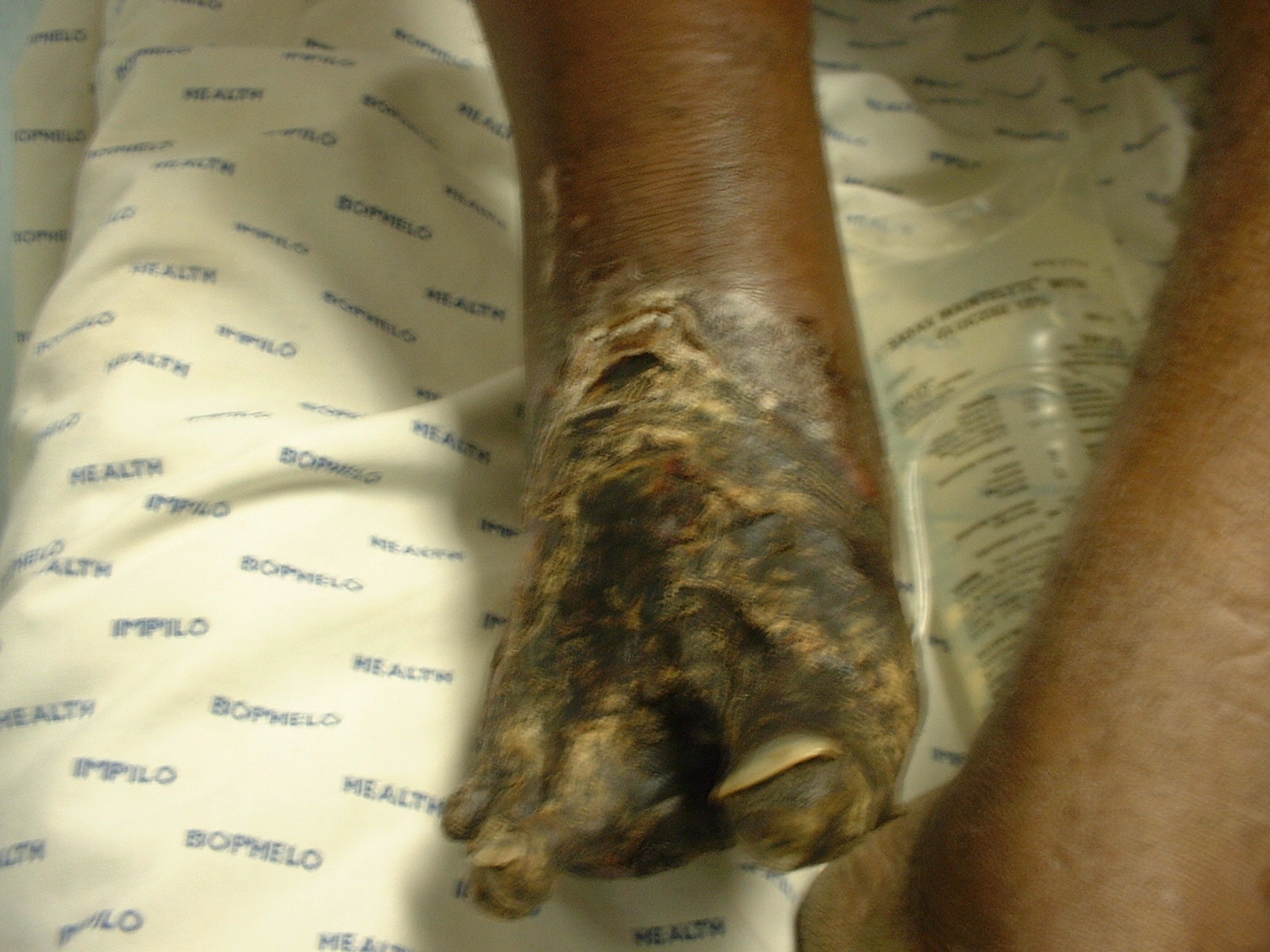
Dry gangrene — black, mummified, the circulation gone. This is what caused the unrelenting pain. This is what Umtata turned away four times. The amputation was not optional.
"Because we do not have a bone-cutting surgical saw, we referred him to Umtata. He was turned away on the grounds that there were 'no available beds' for an operation which was not a serious emergency."
After five hours of predominantly pain-filled travel in a government car, he was re-admitted to our hospital, where he spent the next week in constant pain. We sent him back. The story repeated. That night, poor "Tata" — as he became affectionately known — was once again back in his bed in Isilimela. He began chanting: "No more Umtata. No more Umtata."
When we suggested he go back for the fifth time, he refused point blank. He said he would rather die than make that fruitless trip again.
We realised we had to do something. We were unable to borrow a bone saw or a file from the nearest sister hospital, 60 kilometres away. So eventually we decided to use the Leatherman Super Tool that one of us had brought with him. We sterilised it. We carried out an above-knee amputation under spinal anaesthetic — using the Super Tool to cut through the femur and file off the sharp edges of the cut bone.
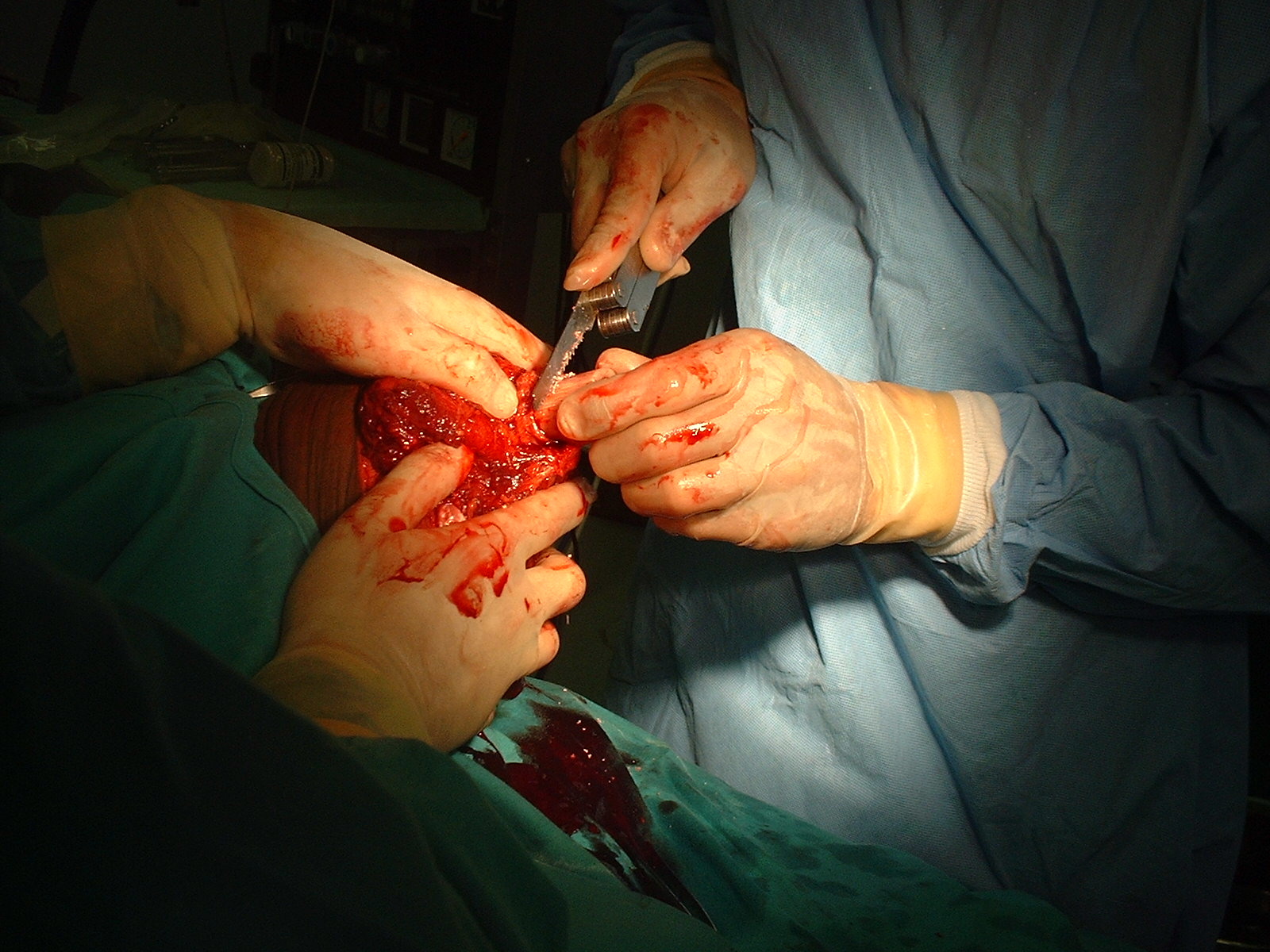
Spinal anaesthetic in place. The operation underway. The Leatherman used to section the femur and file the bone edges. Isilimela Hospital, Eastern Cape. January 2001.
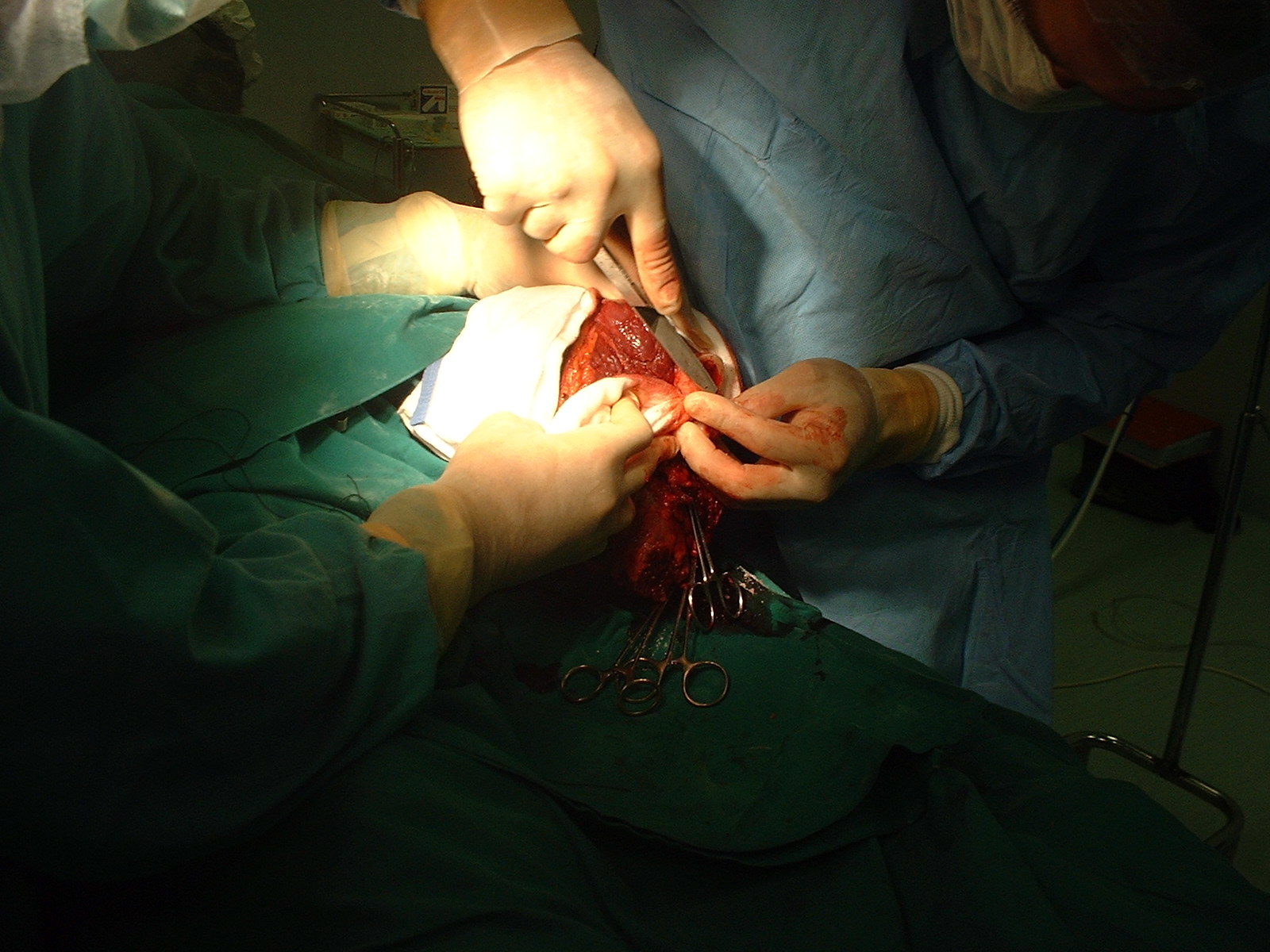
Controlling bleeding, preparing the flap. Rule two: if you think of a drain, put it in. Rule three: thou shalt appose and not necrose.
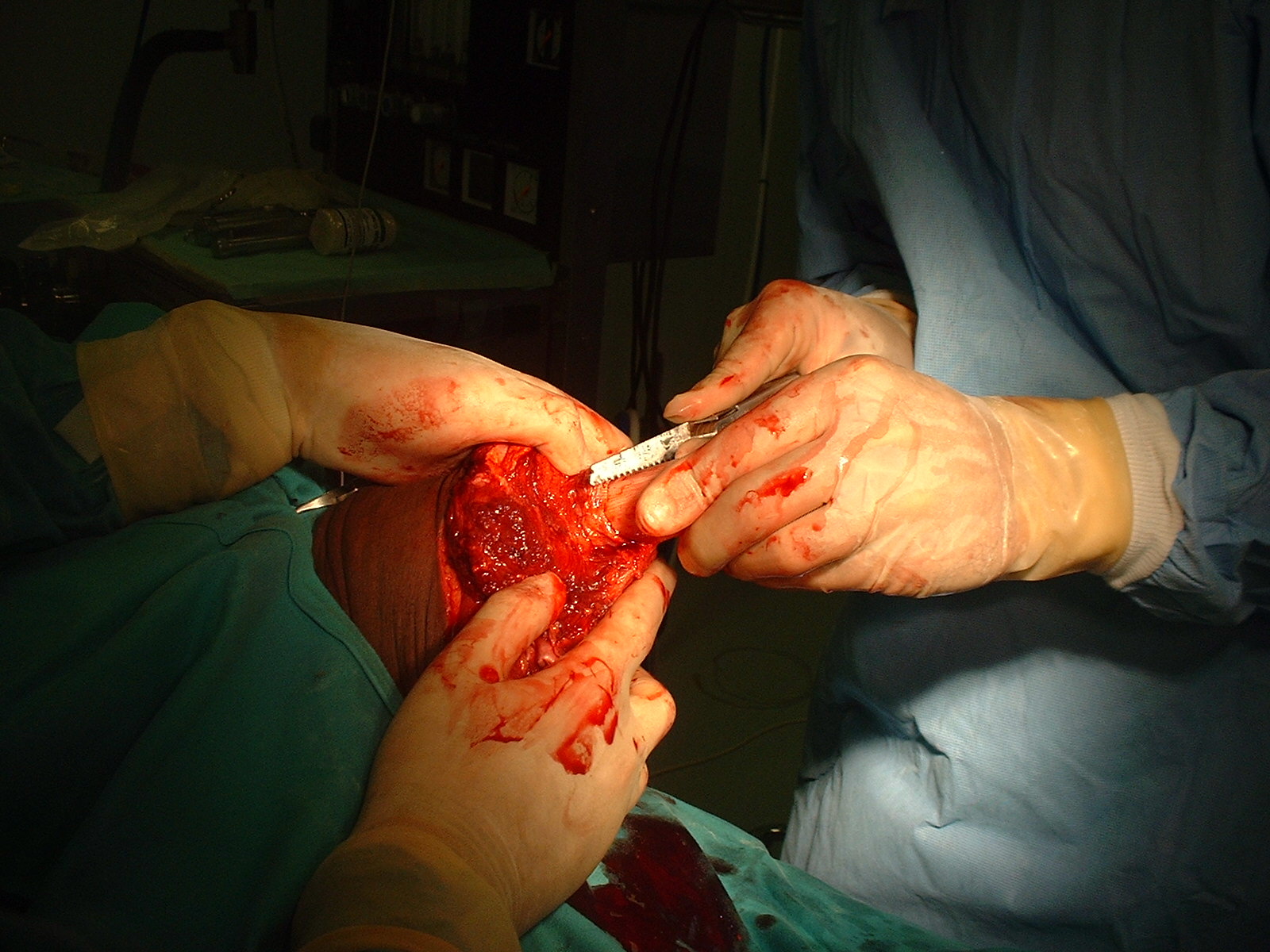
The sterilised multi-tool cutting through the femur. The same instrument is visible in the surgeon's hand. Unpublished until now.
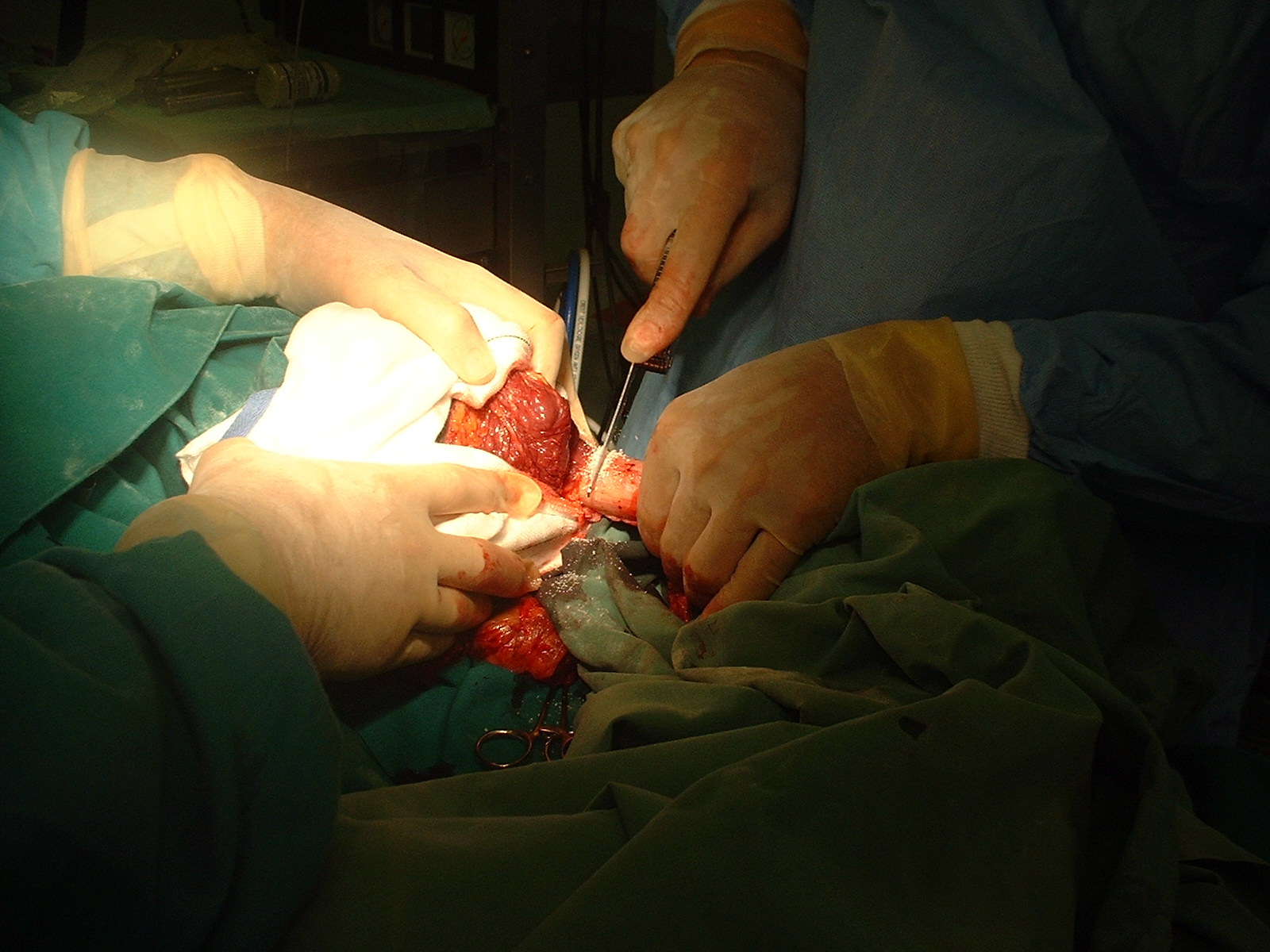
The wound being closed. The operation a complete success. The pain that had been unrelenting for weeks — gone.
The operation was a complete success. Tata left hospital after ten days, walking with the help of the primitive wooden crutches that are standard in this part of the world. He visited us periodically afterwards — to demonstrate his healthy stump and his smiling face. He was, in his own words, eternally grateful.
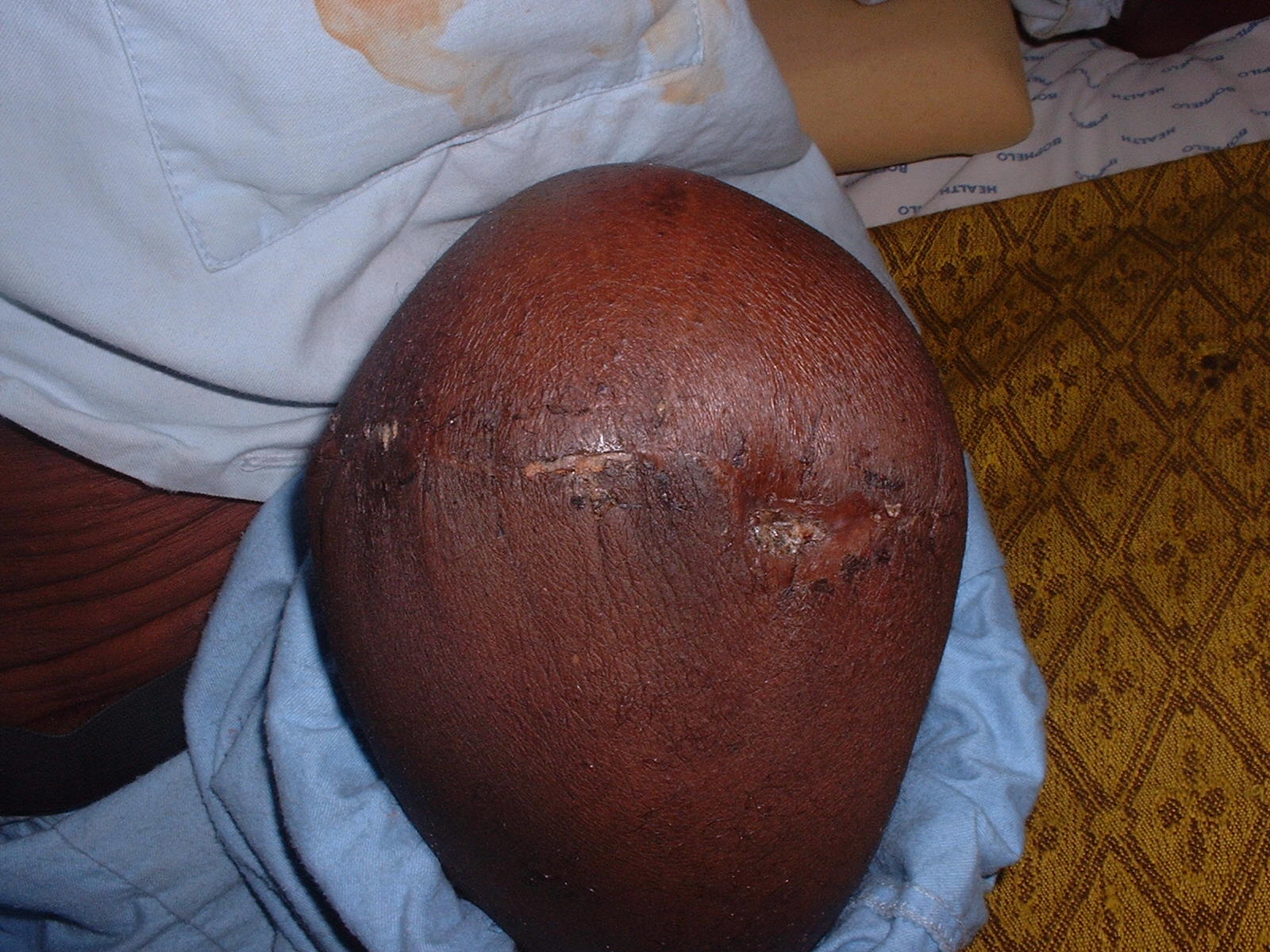
Clean. Round. Healing well. Two days post-operative. This is what a successful above-knee amputation looks like when the rules are followed and the patient's biology is respected.
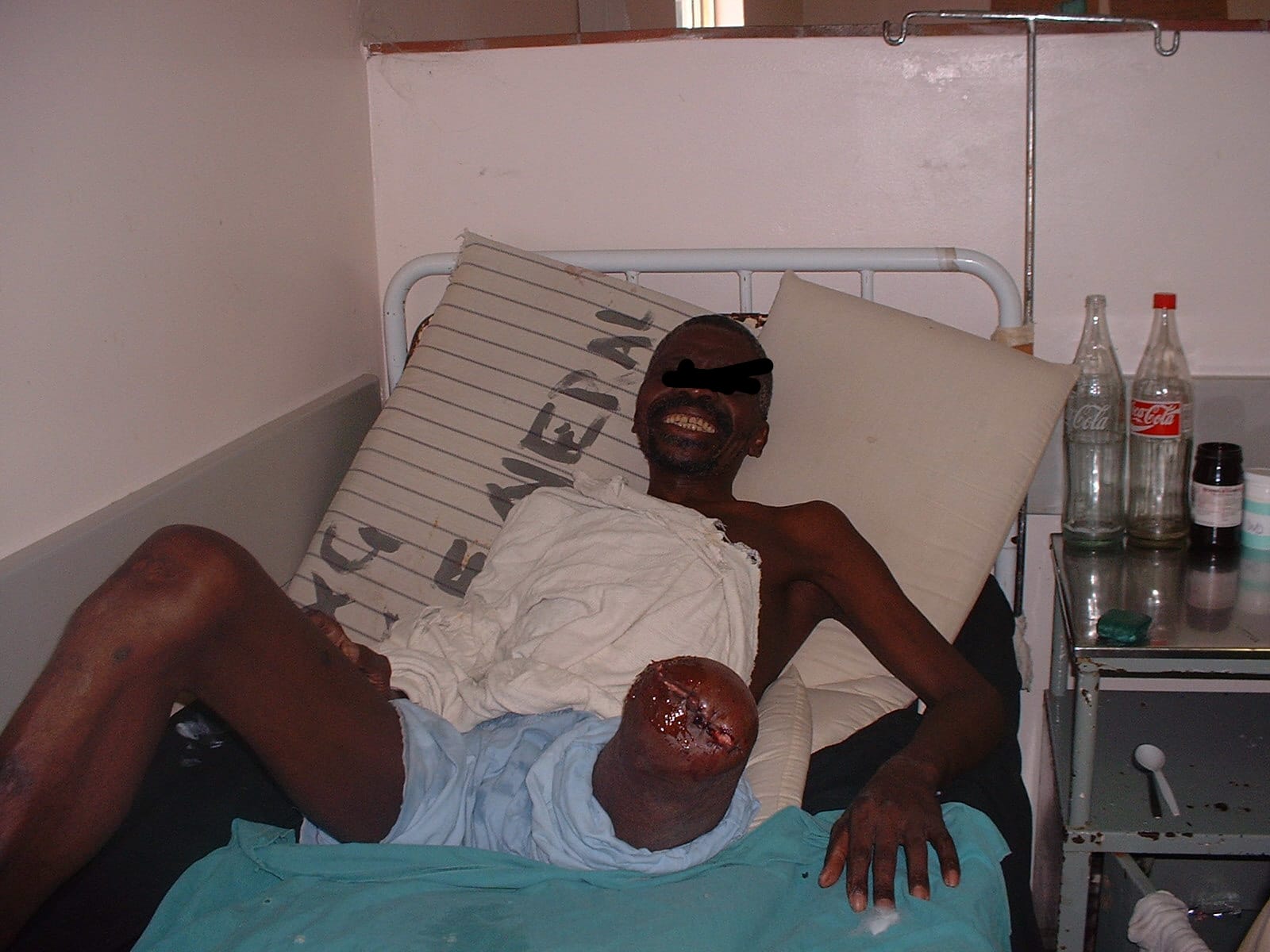
The pain that had been unrelenting for weeks is gone. That smile says everything. The Daily Dispatch would find him three months later, still at Isilimela, zipping around in his wheelchair and cheering up the other patients.
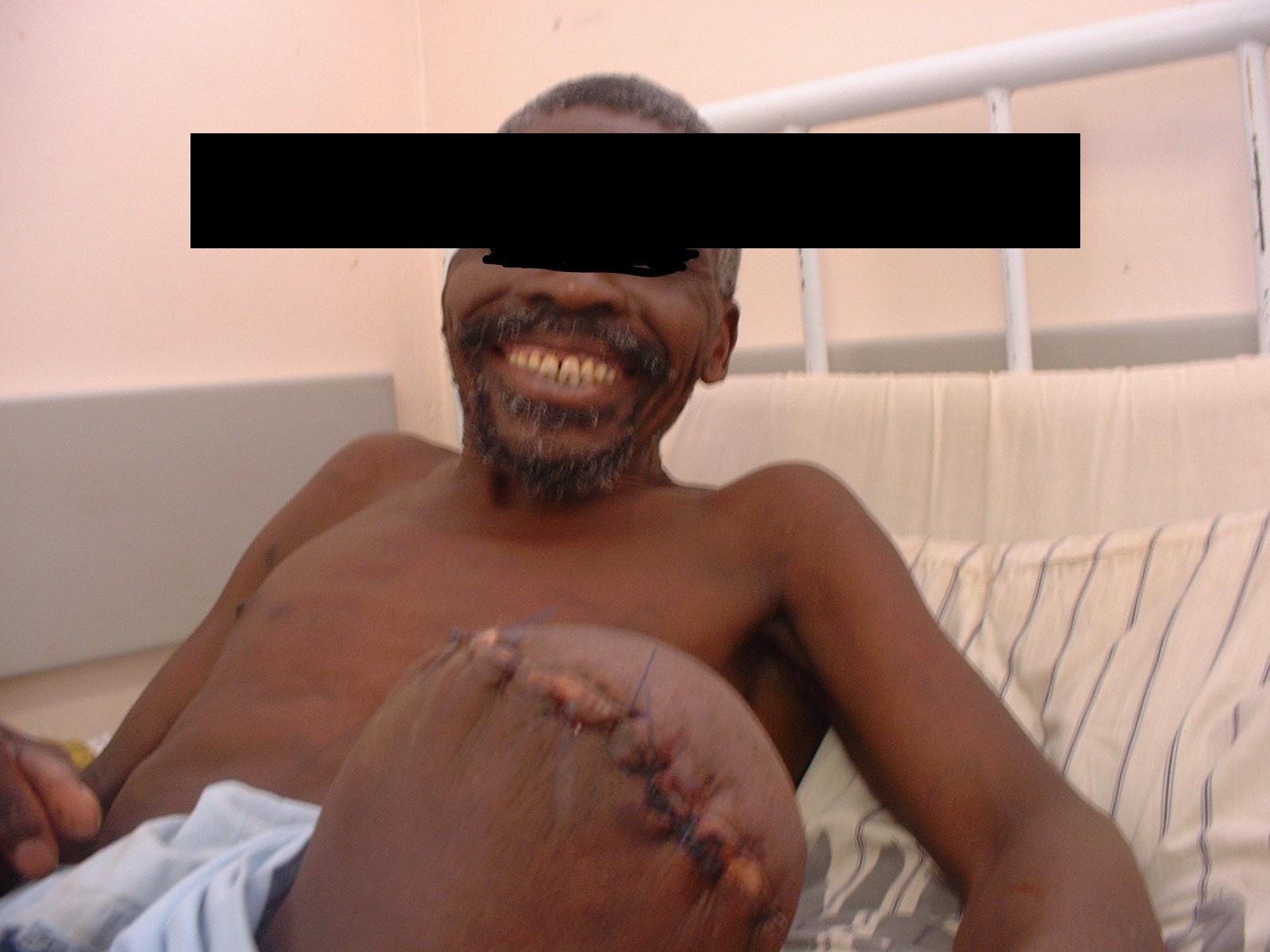
Sitting up. The wound closing. The man who said "No more Umtata" — alive, free of pain, and smiling. Despite everything, the patient got better.
These photographs have never been published until now. They document what it looks like when medicine is stripped to its absolute essentials — when the gap between what a patient needs and what the system provides is so vast that the only answer is improvisation, courage, and the refusal to accept that nothing can be done.
Tata did not need a fully-equipped theatre. He needed a doctor who would not abandon him. That distinction — between what medicine ideally requires and what medicine actually demands — is the one that has shaped every deployment since.
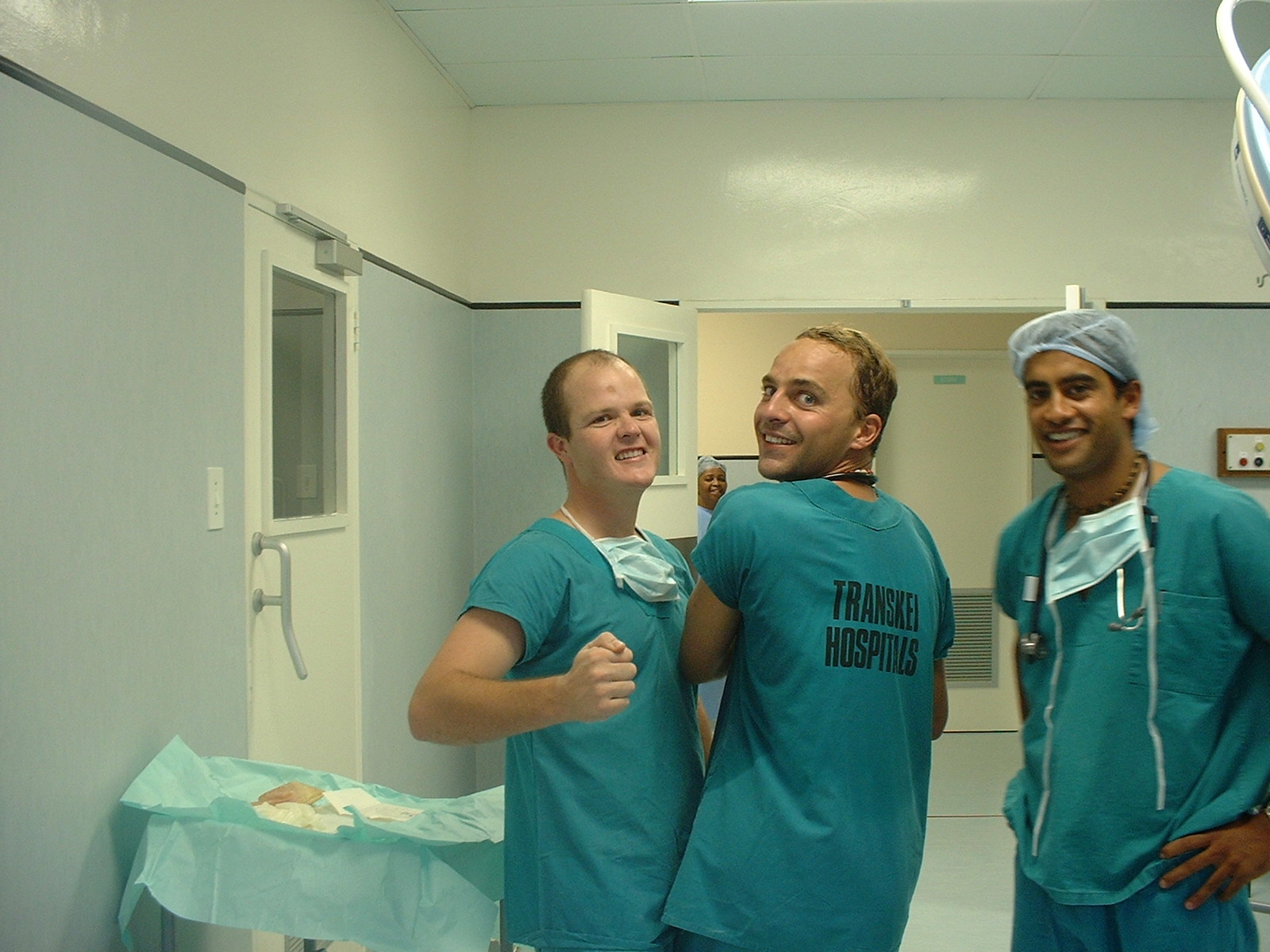
The three Isilimela doctors · Eastern Cape · 2001 · "It beats the shit out of working in town."
The clinical account of this operation was written by Roger Strover FRCS — plastic surgeon, ex-Head of Department at Groote Schuur Hospital, and the father of the surgeon who held the Leatherman. He was the better writer. The hands in these photographs are his son's.